Insights / Infrastructure / Opinion
Data Centers Are Destroying the Planet. Are They Really?
Water, power, cooling and sovereignty: Philip Grech argues that data centres should be judged on their engineering and community benefits.
The argument in brief
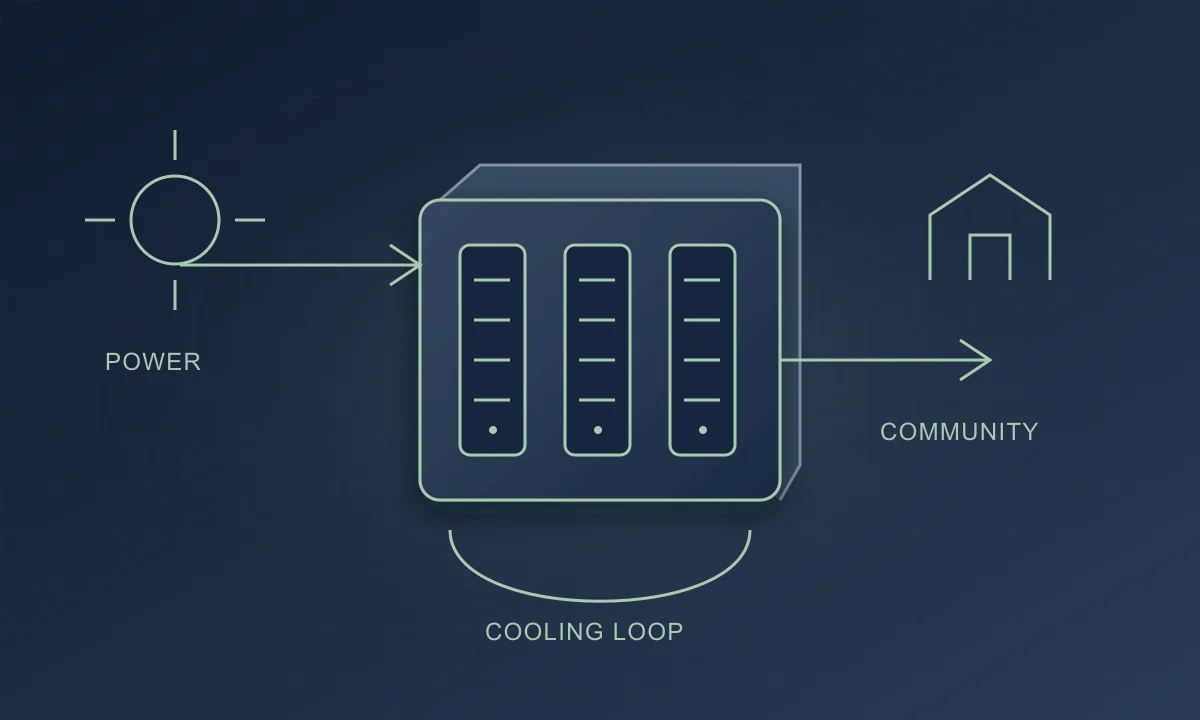
Judge the project, not the label. Phil explores how electricity generation, cooling, water sources and community benefits change the case for a data centre.
In this article
- A note on how this article was written
- Let's start in Australia
- The water numbers need context too
- Cooling technology is changing very quickly
- Data centers can help create new electricity generation
- Then there is something much bigger: sovereignty
- Canada has worked this out
- Australia has exactly the same problem
- Norway asks a different question: what else can we use?
- China is approaching the problem at enormous scale
- Communities should get something in return
- The jobs argument also needs some honesty
- The biggest mistake is assuming every data center is the same
- The press loves the biggest number
- This debate needs to grow up
- The cost of saying no is real too
- Don't let rhetoric replace engineering
- The conclusion is actually quite simple
A note on how this article was written
I use AI extensively in my work, so it would be a little silly to pretend otherwise. AI helped me research sources, challenge my thinking and draft parts of this article. The views and conclusions are mine. I reviewed, changed and shaped the final piece myself. In short, I used AI as a tool.
Data centers have become one of the latest villains of the technology world. They use too much electricity. They drink too much water. They take farmland. They strain power grids. They create noise. They get tax breaks. And now, because artificial intelligence needs enormous amounts of computing power, apparently we are about to cover the planet in gigantic grey sheds just so people can ask ChatGPT what to cook for dinner.
Some of the criticism is justified. A badly located, badly designed data center can put real pressure on electricity, water and local infrastructure. But that isn't the whole story.
The problem with much of the debate is that we have taken the words data center and turned them into a single environmental category, as though a twenty-year-old facility cooled with drinking water is essentially the same thing as a modern AI facility using closed-loop cooling, recycled water and newly built renewable generation.
They aren't remotely the same.
And once again, the interesting part starts when you get past the headline.
Let's start in Australia
Australia is about to have this debate in a very big way. New South Wales already has around 90 operating data centers, and in March 2026 the NSW Government advanced another 15 projects worth a combined $51.9 billion through its Investment Delivery Authority. Data-center investment in NSW had been growing at an average of around 65% a year over the previous three years.
That is serious infrastructure, and it is completely reasonable for Australians to ask what this will do to our electricity supply, our water systems and our communities.
What I find interesting is that the Australian Government's response isn't to pretend data centers are environmentally harmless. It is essentially saying that if you want to build them here, you need to build them properly.
Australia's 2026 expectations for data-center and AI infrastructure developers require projects to contribute to the national interest, support the energy transition, use water responsibly, invest in Australian workers and strengthen Australian research and technical capability. Developers are being pushed toward additional clean generation and storage, paying their share of electricity infrastructure costs, improving cooling efficiency and looking for non-potable and circular water solutions.
The government has gone further by signalling that very large data centers should underwrite additional electricity supply and bear the costs of the infrastructure required to connect them.
That is a far more useful conversation than simply shouting that data centers use a lot of electricity. Of course they do. The questions that actually matter are where that electricity comes from, what additional generation gets built and who pays for it.
The water numbers need context too
Water is probably the easiest part of the data-center story to make frightening because the numbers sound enormous. Millions of litres quickly become hundreds of millions, and suddenly the picture in people's minds is an enormous industrial building with a garden hose permanently turned on.
Some data centers genuinely do consume significant amounts of water, particularly where evaporative cooling is used. In water-stressed areas that can be a serious issue and should not be dismissed.
But Australia has now put some useful context around the national numbers. According to Australian Government analysis released in 2026, Australian data centers consumed an estimated 5.5 gigalitres of water for cooling in 2025. That represented roughly 0.04% of Australia's total industrial water use.
That doesn't mean water suddenly stops mattering. A small national percentage can hide a serious local problem if a development is placed in the wrong catchment or competes with communities during drought. What it does mean is that the statement “data centers are consuming Australia's water” doesn't tell you very much on its own.
You need to know what kind of cooling system is being used, whether the facility is using drinking water or reclaimed water, whether that water is evaporated or recirculated, how often it needs replacing and how the demand compares with the available local supply. Those aren't minor details. They are the difference between a sensible project and a stupid one.
Cooling technology is changing very quickly
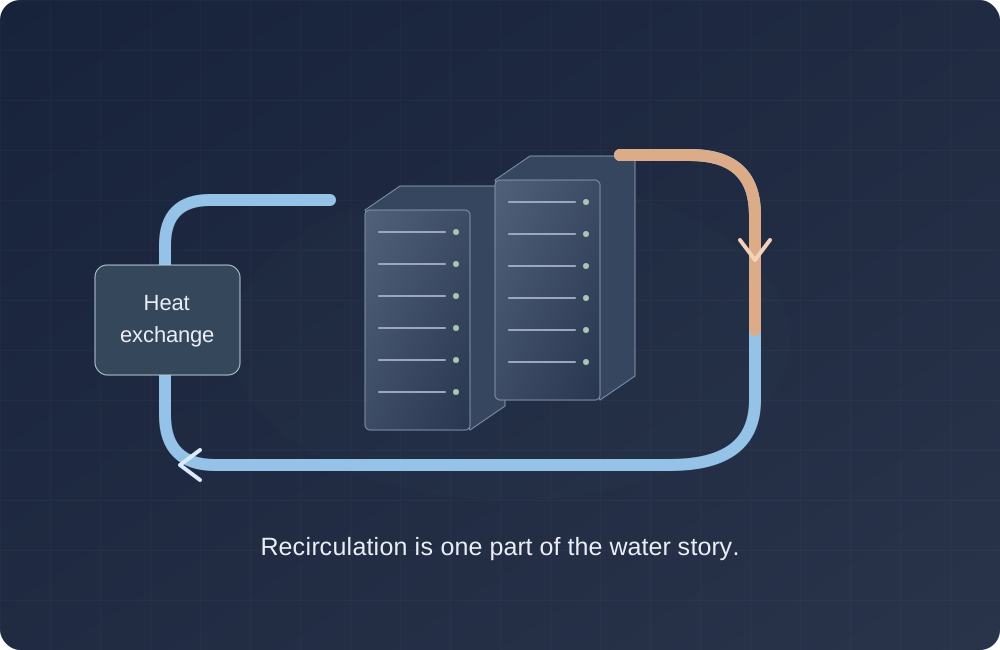
The idea that a data center simply consumes a constant river of fresh water is also becoming increasingly outdated. Modern closed-loop liquid-cooling systems can fill a cooling circuit and continuously reuse that water rather than constantly replacing it. Microsoft says improvements across generations of its data-center designs have reduced its water-use intensity dramatically, and its newest designs are moving away from evaporative cooling in many circumstances.
Reclaimed water is also becoming much more important. Instead of using drinking water that could otherwise supply homes, some facilities can use treated wastewater or other non-potable sources. Sydney Water is already thinking about this problem as the Australian industry grows. Planning increasingly focuses on recycled water, additional infrastructure and ensuring that large industrial users do not simply push water-security costs onto households.
That is how the discussion should work. Don't pretend water doesn't matter. Engineer the problem.
Data centers can help create new electricity generation
There is another assumption I hear constantly: more data centers automatically means burning more fossil fuels. Again, the reality is more complicated.
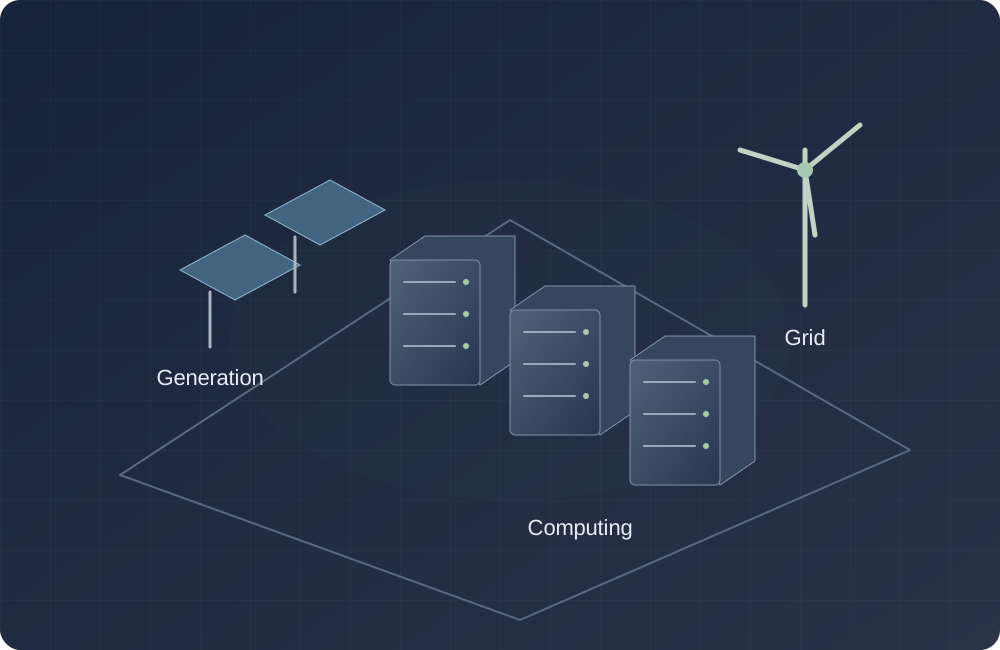
Australia's renewable-energy build-out is already being supported by technology companies signing long-term agreements with new generation projects. Microsoft, for example, entered a long-term agreement connected with the 300 MW Walla Walla Solar Farm in New South Wales. Amazon has also signed power-purchase agreements connected to solar projects in Victoria and Queensland.
These agreements matter because building a solar or wind farm costs an enormous amount of money. Banks and investors want confidence that somebody will buy the electricity for years into the future. A large data-center operator willing to sign a 10- or 15-year contract can provide exactly that certainty.
That doesn't mean somebody runs an extension cord from the solar farm to the server room. When the sun isn't shining, the grid still needs storage, firming and other generation. Gas, hydro and potentially nuclear power in some countries remain part of the wider energy conversation.
But there is a fundamental difference between a giant new electricity consumer simply arriving and demanding existing power, and a giant customer helping underwrite new generation. Australia should encourage the second and make the first increasingly difficult.
Then there is something much bigger: sovereignty
This part of the data-center debate receives nowhere near enough attention. What does it actually mean for a country to be digitally sovereign?
At its simplest, digital sovereignty means having enough control over your critical data, computing capacity and digital infrastructure that your country can make its own decisions and continue operating under its own laws without being completely dependent on foreign governments or foreign technology companies.
It doesn't mean disconnecting yourself from the world. Modern digital systems are far too interconnected for that. But there is a huge difference between being interconnected and being dependent.
If virtually all of your country's critical computing capability sits overseas, your information is processed primarily under foreign jurisdictions and your companies cannot access advanced AI computing without relying entirely on infrastructure controlled elsewhere, how sovereign are you really?
Not very.
Canada has worked this out
Canada is making this argument increasingly explicit under Prime Minister Mark Carney.
In 2026, the Canadian Government launched its AI for All strategy and highlighted Canada's dependence on foreign compute, cloud and data-storage providers as a strategic weakness. The concern is not simply economic. It is about Canadian information being processed under foreign legal systems, Canadian businesses depending on infrastructure controlled elsewhere and Canada lacking enough domestic computing capacity to build its own AI economy.
Canada has therefore begun investing in sovereign AI computing infrastructure, including major domestic supercomputing capacity and large-scale Canadian data-center developments.
The idea is simple. If Canada wants Canadian AI, Canadian research, Canadian defence systems, Canadian health applications and Canadian businesses using advanced computing, then Canada needs serious computing infrastructure inside Canada.
Having servers physically inside the country doesn't automatically make a system sovereign. Ownership matters. Legal jurisdiction matters. Encryption matters. Operational control and supply chains matter. But you certainly cannot have meaningful digital sovereignty if you have almost no domestic computing infrastructure at all.
You can't outsource everything and then declare yourself independent.
Australia has exactly the same problem
Australia should be having the same conversation.
If Australians are going to use AI for defence, health, government, finance, scientific research, mining, critical infrastructure and business, we need substantial computing capacity inside Australia.
Sending Australian information overseas, having somebody else's computers process it and assuming global relationships will remain friendly forever is not a serious national resilience strategy.
Australia's government is already recognising this. Its expectations for data-center developers specifically include data sovereignty, national security, domestic skills and access to computing capacity for Australian researchers, start-ups and businesses.
This is why I struggle with the argument that data centers are simply giant industrial buildings consuming electricity. Increasingly, they are closer to national infrastructure.
Twenty years ago we talked about roads, airports, ports and electricity networks as strategic infrastructure. In an AI economy, computing capacity belongs somewhere on that list too.
Norway asks a different question: what else can we use?
Norway provides another interesting model.
It has obvious advantages for data centers. It has abundant renewable hydroelectricity, a cool climate and a sophisticated electricity system. But Norway isn't simply welcoming every data center with open arms. Its government has increasingly treated them as critical digital infrastructure that should provide wider benefits.
One particularly sensible area is waste heat. Servers generate enormous amounts of heat. Normally that heat is treated as an engineering nuisance that must be removed from the building. Norway has started asking a much better question: can somebody else use it?
Since 2025, planned Norwegian data centers above a certain size have been required to examine whether their excess heat can economically be reused. Projects have investigated supplying heat to district-heating networks and nearby industrial users.
Think about what that means. Electricity enters the facility, computers use it to perform useful work and the resulting heat is captured for another productive purpose rather than simply dumped outside.
You use the energy twice. That's the kind of environmental thinking I find much more interesting than arguing that the building shouldn't exist at all.
China is approaching the problem at enormous scale
China provides another completely different example.
Its East Data, West Computing strategy is deliberately shifting more computing infrastructure toward western regions where land and energy resources are more abundant. The basic idea is to process data and computing workloads generated in heavily populated eastern China using infrastructure increasingly positioned closer to large energy resources elsewhere.
China is also pushing enormous amounts of renewable generation into these computing regions. That doesn't mean Chinese data centers are currently clean. Coal still supplies a substantial amount of China's electricity, and pretending otherwise would be nonsense. But solar, wind, hydro and nuclear generation are growing rapidly, and Chinese planning is increasingly connecting computing infrastructure with areas where new generation can be built at scale.
China is also experimenting with designs that would have sounded strange a few years ago. Offshore and underwater data-center projects have explored using surrounding seawater for cooling, dramatically reducing both land requirements and freshwater consumption.
I'm not suggesting Australia start dropping server farms into Sydney Harbour. The point is that data-center engineering is evolving. What a data center looks like today is not necessarily what it will look like in ten years.
Communities should get something in return
This is an area where some American communities have become much smarter.
If a technology company wants to spend billions building infrastructure in your region, that gives the community negotiating power. Use it.
In Virginia, some counties have negotiated direct contributions toward fire and emergency services, infrastructure and community programs alongside the tax revenue generated by the facilities. Meta has invested in water and wastewater infrastructure associated with its developments in several American communities.
Then there is Loudoun County, Virginia, probably the world's best-known concentration of data centers. Data-center property taxes there have grown into an extraordinary source of local government revenue, supporting schools, emergency services, libraries, roads, parks and other public services.
Loudoun is also a warning about overconcentration. Residents have raised legitimate concerns about noise, transmission infrastructure, land use and how much development is simply too much. Good. That's what planning is for.
The lesson isn't that every community should cover itself with data centers. The lesson is that communities should decide where they belong, what standards developers must meet and what the public receives in return.
The jobs argument also needs some honesty
There is one argument the data-center industry sometimes oversells, and that is permanent employment.
Large data centers can create significant construction work. Thousands of workers may be involved during a major build, along with substantial opportunities for electricians, engineers, civil contractors, security specialists and local suppliers. But once completed, a giant facility doesn't necessarily employ thousands of people permanently.
That's simply the nature of highly automated infrastructure.
So I wouldn't sell data centers to a community by promising that they will solve unemployment. Their economic value is broader: capital investment, tax and rates revenue, construction, energy infrastructure, local contracting, highly skilled technical jobs, training, digital capability and the industries that become possible when serious computing capacity exists nearby.
That is a much more honest proposition.
The biggest mistake is assuming every data center is the same
This is where much of the mainstream debate falls apart.
A data center using drinking water for evaporative cooling is not the same as one using recycled water through a closed-loop system. A facility consuming existing grid capacity without adding generation is not the same as one underwriting a new solar farm, wind farm and storage.
A project forcing households to subsidise its transmission upgrades is not the same as one paying the full cost of its connection. A building dumped onto productive agricultural land is not the same as one placed inside a properly planned industrial precinct.
A foreign-controlled facility with little strategic benefit is not the same proposition as sovereign computing capacity that gives Australian government, businesses and researchers access to domestic AI infrastructure.
And a data center simply throwing enormous amounts of heat into the atmosphere is not the same as a facility designed to recover and reuse that heat.
Yet put the words DATA CENTER in a headline and suddenly those distinctions disappear.
That's not analysis. That's labelling.
The press loves the biggest number
Data centers are almost perfect material for mainstream media. They combine AI, water, electricity, farmland, climate change, giant technology companies and billions of dollars. You can build a frightening headline before you've finished your morning coffee.
“AI DATA CENTER TO USE BILLIONS OF LITRES OF WATER.”
Okay. Over what period? Is that drinking water or recycled water? Is the water consumed or circulated? What percentage of the local supply does it represent? What cooling system is being used? What happens during a drought?
Those questions don't make the number disappear. They tell you what the number actually means.
The same applies to electricity. If somebody tells me an Australian AI campus could require two gigawatts of power, I absolutely want to know that. But I also want to know who is building the additional generation, who is paying for the transmission infrastructure, how much renewable capacity is being added, what storage or firming supports it and what strategic capability Australia gets in return.
Without that context, the giant number is mostly theatre. And just as with AI safety, you can be given a technically correct fact and still walk away with completely the wrong understanding.
This debate needs to grow up
There is nothing wrong with opposing a bad data-center project.
If a developer wants to use scarce drinking water, dump the electricity costs onto households, build on valuable land, contribute almost nothing to the community and walk away with enormous tax concessions, fight it. I probably would too.
The problem starts when every data center is opposed using the same recycled arguments regardless of the technology, location or deal being proposed.
This is where some of the public debate becomes counterproductive. There are campaigners and commentators who genuinely care about water, farmland and the environment. Those concerns should be heard. But good intentions aren't a substitute for understanding how the technology works.
If somebody is campaigning against a closed-loop water system because they have read that “data centers consume millions of litres of water”, without understanding that much of that water may be continuously recirculated, they aren't improving the debate. If they oppose a project because it requires enormous amounts of electricity without acknowledging that the developer is contractually underwriting new renewable generation and paying for its own connection, they aren't presenting the whole story either.
And if Australia delays serious domestic computing infrastructure because every proposal becomes an emotional fight over the words data center, we shouldn't pretend there is no cost to that.
There is.
The cost of saying no is real too
This is the part that rarely makes it into the environmental debate.
Delaying good data-center infrastructure doesn't freeze the world in place. The investment goes somewhere else. The computing capacity goes somewhere else. The researchers go somewhere else. The AI companies build somewhere else. And increasingly, the data goes somewhere else too.
Canada understands this. Norway understands it. China certainly understands it. The United States understands it.
They may disagree completely about how the infrastructure should be built, owned and regulated, but none of those countries is seriously suggesting that the future digital economy can operate without enormous amounts of computing infrastructure.
Australia shouldn't either.
If we want sovereign AI capability, domestic research, advanced defence systems, world-class health research, technology companies and Australian businesses capable of competing globally, then somebody has to build the computers.
There is no cloud floating above us. The cloud is buildings, fibre, electricity, cooling systems and servers.
Don't let rhetoric replace engineering
This is where I think the mainstream conversation really lets us down.
The news business naturally gravitates toward conflict. A story saying “community fights enormous data center consuming millions of litres of water” is dramatically more interesting than a story explaining the difference between evaporative cooling, closed-loop liquid cooling and recycled wastewater.
One gets a headline. The other probably gets three readers and an engineer called Steve.
So the complicated story gets flattened.
Then it gets picked up on social media, where the detail gets flattened again. Soon people are arguing about data centers using talking points that may have been accurate for a completely different facility, in a completely different climate, built ten years earlier.
The people sharing those claims aren't necessarily lying. Many genuinely believe what they're saying. But sincerity doesn't make an argument technically correct.
And this is where well-meaning activism can actually become harmful. If people oppose infrastructure they don't understand, using environmental assumptions that modern engineering has already started solving, the result isn't automatically a cleaner future.
Sometimes the result is simply delay.
New renewable generation doesn't get built. Water infrastructure upgrades don't happen. Local tax revenue disappears. Sovereign computing capacity moves offshore.
And the environmental demand created by AI doesn't vanish. The data center simply gets built somewhere else, possibly somewhere with dirtier electricity, worse water management and weaker regulation.
That isn't an environmental victory.
It's outsourcing the problem and congratulating ourselves for not being able to see it.
The conclusion is actually quite simple
I don't think Australia should become a giant data-center construction site. I don't think every development should be approved, and I certainly don't think technology companies should be allowed to arrive, consume scarce resources and send the bill to everybody else.
I think we should be much tougher than that.
If you want to build here, bring the infrastructure with you. Add electricity generation. Pay for your connection. Use recycled or non-potable water wherever practical. Adopt efficient cooling technology. Protect valuable agricultural land. Train Australians. Employ Australian engineers. Give Australian researchers and businesses access to the computing capacity. Strengthen our sovereign capability. And make sure the community hosting the facility gets something meaningful in return.
Then judge the project on those facts. Not on the label.
That is what frustrates me about so much of the current debate. People who would never accept a two-minute television story as sufficient information before buying a house, investing their savings or choosing a medical treatment will happily form an opinion on billions of dollars of digital infrastructure from a headline and three angry quotes.
The mainstream media then amplifies it because conflict sells. Social media turns it into a cause. Before long, opposition becomes fashionable and the technical details almost become an inconvenience.
That is backwards.
Environmental concerns should force better engineering, better planning and better deals. They shouldn't replace engineering.
Ask hard questions. Demand evidence. Challenge developers. Make them prove where the water comes from, how the electricity will be supplied and what the community receives in return. But understand the technology before deciding you are against it.
Because Australia is going to need data centers. Canada knows it. Norway knows it. China knows it. America knows it.
The real decision isn't whether these buildings exist. It's whether Australia builds them intelligently enough to gain the benefits without blindly accepting the costs.
And you won't answer that question from a headline.